
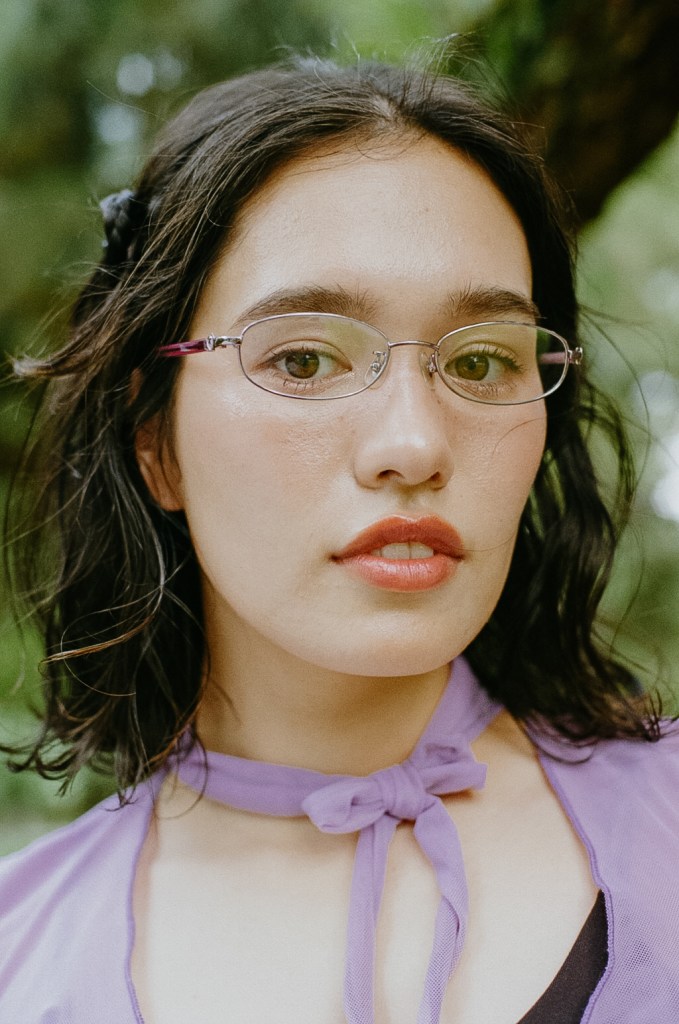
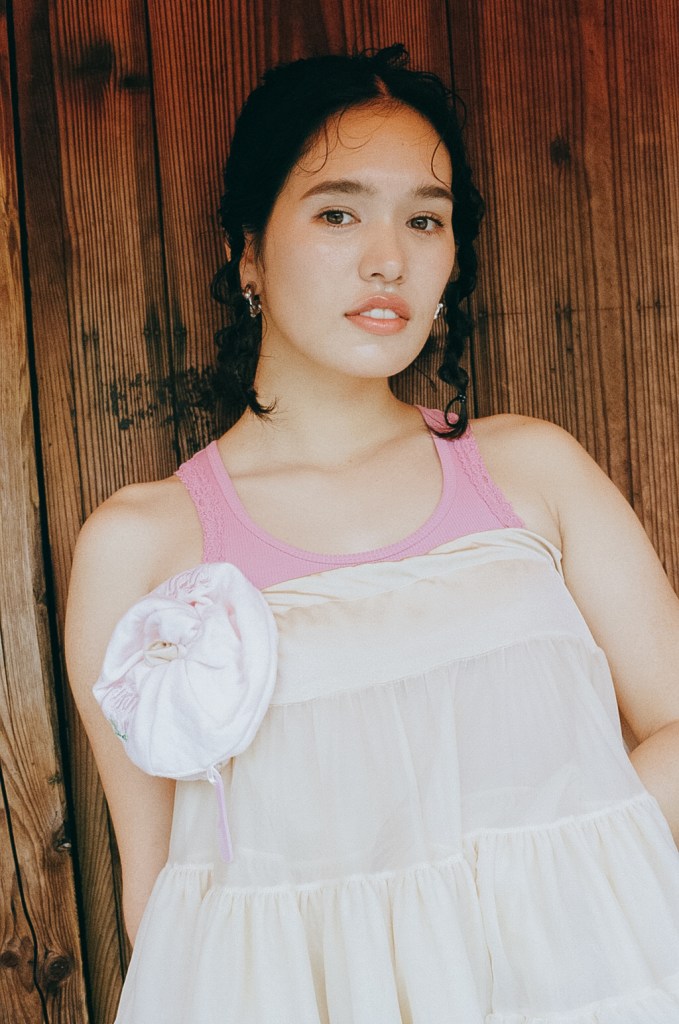
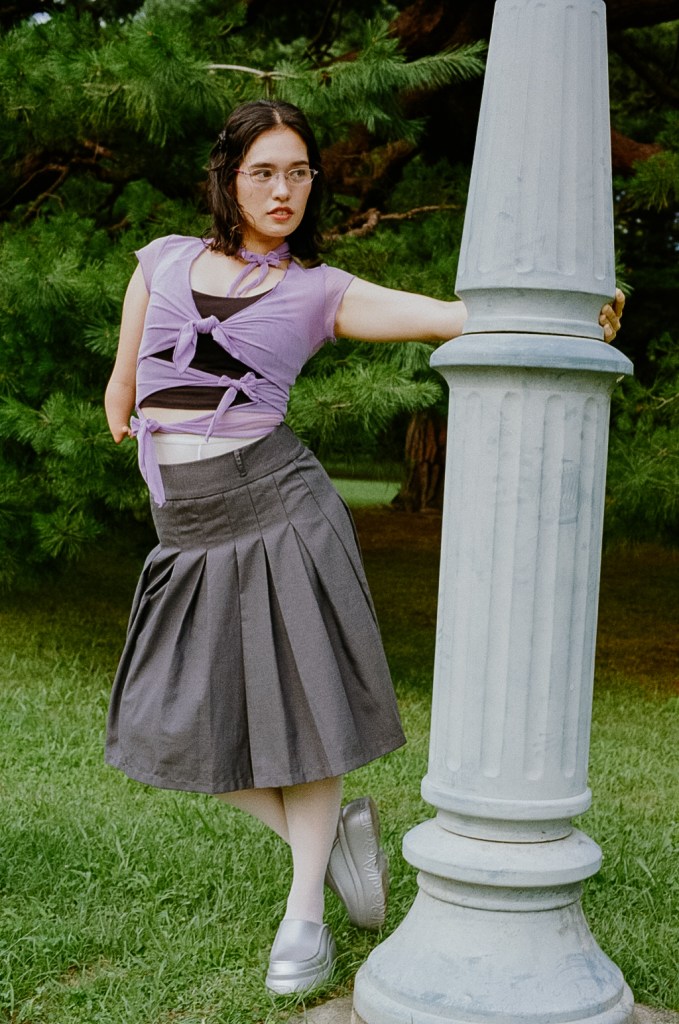
A portrait of Mei Ichinose, captured in Kyoto by Shiori Ota. The conversation continues in London…
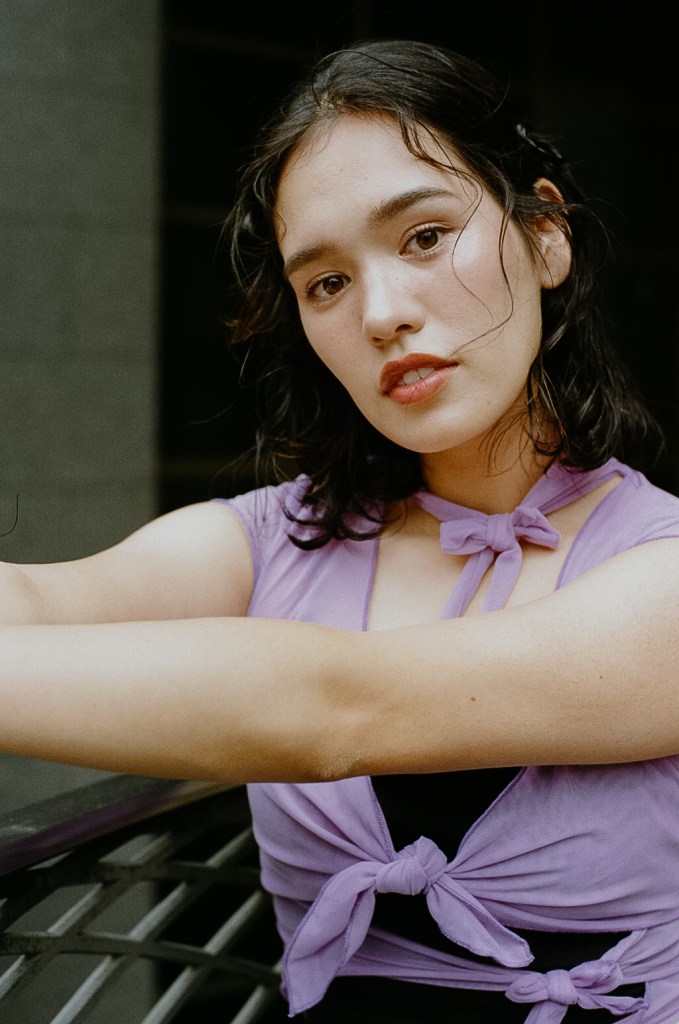
一ノ瀬メイ。元パラリンピック選手でモデル、パブリックスピーカーとして活動する彼女のBURING MAGAZINE 特別インタビューそして京都で撮り下ろしたファッションポートレート作品をお届けします。
2017年に拠点をオーストラリアに移し、競技と自己成長の両面において新しい視点を得た彼女は結果以上に自分の価値を見出し、個人としてもアスリートとしても幸せと充実さを追求するようになりました。
一ノ瀬メイがどのような経験を通してバランスの取れたポジティブな視点を持つようになったのか、そしてアスリートとしてだけでなく、一人の人間として成長し常に変化していく彼女の世界で活動するこの先のビジョンについてご紹介します。
Mei Ichinose: Former Paralympic athlete, model, and public speaker, featured in a special interview for BURNING Magazine, along with an exclusive fashion portrait series shot in Kyoto, JAPAN.
In 2017, she relocated to Australia, where she gained a new perspective on both her sport and personal growth. Beyond results, she discovered her own worth, pursuing happiness and fulfillment as both an individual and an athlete.
In this feature, we explore the experiences that helped Mei Ichinose develop a balanced and positive outlook, her journey of growth as a person beyond her athletic career, and her evolving vision as she continues to shape her world.

❤ 過去に滞在していたオーストラリアでの選手生活のなかで、印象的で強く影響を与えられた出来事は?
メイ: リオデジャネイロパラリンピックの後、3ヶ月オーストラリア合宿を行なって、2019年の春に大学卒業後に拠点を完全に移して2021年の夏まで2年滞在した。
パラリンピックに出るのが幼い頃からの夢で10年かけて達成したけど、個人種目では決勝に残れへんくて、メダルにも全然届かず、常に焦ってる感じだった。自分が達成できたことに満足するっていうよりは、ないものに焦点をあてていた時期。そんな中、有力な選手を海外に派遣する補助金制度の対象に選ばれることができてオーストラリアに行くことにした。強い選手が多くて、日本との時差もあまりない、そして英語圏だったのが理由。あとは一つのチームにオリ・パラ両方の選手が在籍しているチームが見てみたかったし、 自分と同じようにパラを目指す選手に囲まれたかった。
水泳はもちろん自分で選んでやってるけど、 その水泳で思うような結果が残せてなくて。あれもできてない、これもできてないってなってたところ、すごい視野を広げてもらったっていうのがオーストラリアの経験では1番大きかった。例えば、ハッピーなスイマーがファストなスイマーだよねって、 しきりにコーチとか選手みんなが言っていて。それって私にとってはすごく新鮮で。何を犠牲にしてでも結果を残すことが正義っていうのが日本のスポーツ界で受けてきた印象だから、選手としての自分である前にまず 一人間としての自分と向き合うことを大切にする姿勢はいい意味で衝撃だった。水泳を手放した自分には何も残らないんじゃないかとか、水泳で結果が残せなくなったらもう自分には価値がないとか、選手としての自分の価値と人間としての自分の価値を直結で考えちゃう癖がすごいオーストラリアで解けた。 一ノ瀬メイっていう人間が最初にいて、 その上で水泳選手っていうことを選んでやってるっていう当たり前のことを思い出させてくれた。
❤ ハッピースイマーがファストスイマーっていうのは具体的に誰が言っていたの?
メイ: コーチにもよく言われてたし、みんな共通認識があった感じ。例えば拠点をどこに置くかとか、選手としていろんな選択をするとき、自分がハッピーでいられる選択をすることが推奨されていた。 日本では『人間力向上なくして競技力向上なし』と言われてきて。だからスポーツ選手が飲酒した、 タバコ吸ってたとか大きく取り上げられるし。 靴を揃えてるかとか挨拶ちゃんとできてるか、敬語ちゃんと使えてるか、 そういうところから全部人間性を磨いていかないと競技力も上がらないよっていうふうに叩き込まれてレースで自分が負けた相手は自分よりも人間性が優れていると教えられた。
でも、生まれた環境とか体格とか、国によってスタートラインって実は全然違って。レースってスタートラインのもっと前の見えないところから始まってて 。自分の場合は日本では障害を理由に全然スイミングスクールに入れてもらえなかったけどオーストラリアの選手は比較的当たり前にオリンピックの選手と同じような環境が用意されてて、全く一緒ではないけど補助金もある。 スタートラインの違う選手が競技で戦って一人が勝った時に、 人間力が優れてるから勝ったっていうのは違うなと思うようになった。今思うのは、『人間力なくして競技力向上なし』って言葉は、自分との比較において使われるべき言葉である事。自分の人間力が自分の去年より良くなったら、きっと自分の競技力も向上する。でもそれを他人との比較の中で使っちゃうと、違う意味がずれてきてしまう。今もすごい言われてる言葉だから、それで悩んでる選手は多いんじゃないかなあと思う。
<3メイさんの考え方やメンタリティにはすごくインスパイアされる。オーストラリアでの経験以外にも、影響を受けたものはある?
メイ: オーストラリアに引っ越してからヨガを始めたことかな。水泳以外の人ともつながりがほしいなと思ったのがきっかけ。軽い気持ちで行き始めて、 そしたらもちろん体へのメリットもあったけど、メンタルの部分でいい影響が大きくて。ヨガのマットの上では、 肩書きとか全部関係なく、一人間としての自分のケアをちゃんとできたし、自分がどういうことを考えているかとか、自分の体の状態がどうかとかを把握できる場所を作れたことで、 すごい変わった気がする。
❤ メディテーションやったり?
メイ: うんうん、それがすっごい大きかった気がする。ヨガの先生にいろんな相談とかもしてた。2日に1回午後が休みだったから、午後休みは絶対ヨガ行くようにしてた。そこですごいチャージしてた気がするし 自分とのコミュニケーションがちゃんと取れた。
実は2016年のリオデジャネイロのパラリンピックで スタート台に立った時に悟ったことがあって、それは最後一人やんってこと。
いざスタート台に立ったときに、普段あんなにいろんな人の期待とか、コーチに怒られないようにとか、人のこと気にして生きてたけど、 最後レース泳ぐのはほんまに自分なんや、みたいな。 代わりに誰も泳いでくれないし、このレースの結果がどうであれ、全責任自分が取るんやって考えた時に、人生も一緒やなって一瞬で感じて。
もちろん周りに対して気を配るのは大切だけど、でも自分とのコミュニケーションを取っていかないと、最後本当に空っぽな気持ちになる。そこから何かを変えないといけないとはわかっていてもどうやったらいいかわかんなくなってたときにオーストラリアで周りの選手に色々教わったりとか、ヨガで自分とのコミュニケーションの取り方を学んだりして、 パラリンピックで悟ったことを何年もかけて実践できるようになっていった。
パラリンピックでもし結果を残して、今のままでいいっていうメンタリティでオーストラリアに行ってたらまた全然違う経験をしてた気がする。 でも今のままじゃあ何か違う、何か変えないといけない、そういうアンテナをちゃんと張ってたからみんなの言ってることを素直に取り入れられた気がする。
<3 どんな経験も内面的成長につながっているのかと思うと、どんな経験も大切に向き合わないといけないなと思わされる。内にある声を大事にするっていうのがすごい共感できる部分もあって、それを思うようになったのをもっと詳しく聞きたい!
メイ: パラリンピックの舞台って、みんなそこに4年に1度で、かけてきてるから、他の世界大会とは何か全然違うねん。オリンピックには魔物がいるってよく言われるんやけど、 それがすごいよく分かる。プレッシャーもあるし、プールから食堂までどこに行ってもライバルに囲まれているし、 自分とちゃんと繋がりがないとすぐ人に影響されたり、動揺したりしてしまう。
普段から自分の世界を持っている選手、深く深く自分の世界に潜り込める選手が強いっていうのをすごいパラリンピックで感じた。人からの言葉とか反応を見て自分を作り上げていたけど本当に必要だったのは、自分で自分を見つめるっていうこと。 自分で自分を人を介さずに把握する力。心の底から自分はこうですと。自分でちゃんと自分を見つめること。自分との会話をするっていうのが、 必要だったんだよなっていうのを思う。

❤ 講演活動、メディア出演、モデル活動など多岐に渡り活躍されているメイさんですが、今後さらに力を入れていきたい活動、拠点についてどう考えてる?
メイ: 次のステップとして、カテゴリー関係なく自分が出ていく事、障害のある人のために用意された席に起用される以上に、 誰がやってもよかったことに一ノ瀬メイが選ばれる、というのが見ていきたい景色。
子供の頃から広告とかテレビとか雑誌とかで自分みたいな人を見たことがなくて。 いろんな差別とか思い込みとかネガティブなことってシンプルに見たことない、知らないというところから生まれてると思うから、 まずはそういうスポットライトの当たるところにいろんな人が出ていくことで変えられるものがたくさんあると思ってる。水泳の時は社会に対してめっちゃ怒りがあったし、人に対して訴えたいことがすごく多くて。でも怒りから伝えようとすると自分もきつい。今自分がやりたいのは自分が理想とすることを自分のアクションで見せていくこと。メディアの中でもっと多様性が生まれた方がいいと思うなら、自分がまずそこに出ていく。 サステナビリティが大事で地球に対してもっとみんなコンシャスに生きようよって思うなら、 まずは自分がそれをやっていってそれを見せていくっていう、いろんな分野で理想を突き詰めていく事。そうしてるうちにそれが日本だけじゃなくて世界にも広がっていったらいいなっていうのは思ってる。
❤ 行動で見せるっていうのはすごい良いアプローチ。社会で提示される広告やメディアで表現される美しさっていろんなところに影響していると思ってて、周りの女の子が自分の一重まぶたが嫌いって言ってるのも、健康体な子が痩せたいってマインドから抜け出せなかったり。撮影関係の仕事を始めてからは、 作ってる側、主にクライアントの都合があるのはわかるけど、多様性が多くの場合重要視されてないと思う。みてる人の潜在意識に影響することも多い分、多様な人がキャスティングされるべきだし、 作ってる側の人間一人一人が、時代にあった新しいビジョンや表現を考えるべき。口だけの多様性じゃなくて、クリエイティブに多様性を楽しむような世界観があって欲しいと思ってる。
あと一つは、プロセスを楽しむことっていうのも、素敵やと思った!
メイ: コロナで東京大会延期になったやん。 それがめっちゃでかくて。アスリートって、未来に目標を立てるのが当たり前で 、例えば自分の場合、リオデジャネイロのパラリンピックが終わってから、次は東京2020に向けて4年間の練習が始まった。 4年後に結果が出るなら今日をどれだけ犠牲にしてもいいっていうメンタリティで やってたのに、その1日がなくなった。確実に自分に与えられてるものって”現在”でしかないのに、未来のために今の時間を使ってばっかりいたら良くないなと思って。今日のための今日を生き始めないといけないなっていうのがすごいそこで学んだことで。未来に向けて日々の努力はするにしても、今日の幸せを犠牲にするっていうことはもうしてない。今あるものをちゃんと大切にしながら目標に向かって頑張る。そのバランス。

❤ ロンドンで活動を広げたいと思ったきっかけはある?
メイ: 日本ではプラットフォーム作りからやらなきゃいけないけど、イギリスではもう既にあるから その上で自分が何をするかっていうことに集中できる。ロンドンでは広告とかにもいろんな人出てるし、 エスニックバックグラウンド、 スキンカラー、体型、ジェンダー、ディサビリティ、 年齢とかいろんな意味で、社会に既に存在してるダイバーシティがそのまま反映されてる感じがあるなと思って。そんな場所で活動するとみんなに見える形で結果が出せるかもしれないと思った時に、 他の場所も試してみたいなって思った。
❤ それはどのタイミングで? 前から思ってた?
メイ: 日本でいろいろやる中で見えてきたことがたくさんある。それこそ行動で見せるみたいなところで、 日本で活動してプラットフォーム作り(ダイバーシティの重要さを説明する)のも大事やけど、 それよりダイバーシティやっちゃってるイギリスで、 自分がモデルでやって、 イギリスではこんな感じでやってるんですよねって、やり方を見せた方が早いのかも?っていう思いが膨らんできた。
❤ What was an impactful and influential experience during your time as an athlete in Australia?
Mei: After the Rio de Janeiro Paralympics, I participated in a three-month training camp in Australia. Then, in the spring of 2019, after graduating from university, I completely relocated there and stayed for two years until the summer of 2021.
Participating in the Paralympics had been my dream since I was a child, and achieving that after 10 years was incredible. However, I couldn’t make it to the finals in any individual events, and I was far from winning a medal. I was constantly feeling restless. Instead of appreciating what I had achieved, I kept focusing on what I lacked. In the midst of that, I was fortunate to be selected for a grant program that supported top athletes going overseas, which allowed me to go to Australia. I chose Australia because it had many strong athletes, minimal time difference with Japan, and was an English-speaking country. Additionally, I wanted to experience being part of a team where both Olympic and Paralympic athletes trained together and to surround myself with athletes who, like me, were aiming for the Paralympics.
Although swimming is something I chose for myself, I couldn’t get the results I wanted at that time. I was constantly thinking about what I hadn’t achieved or what I was failing at. The most significant takeaway from my experience in Australia was how it broadened my perspective. For example, the coaches and athletes often said, “A happy swimmer is a fast swimmer.” That was such a refreshing concept for me. In Japan’s sports culture, I always felt like achieving results at all costs was the ultimate goal. But in Australia, I learned the importance of facing myself as a person before being an athlete, which was a positive shock.
I used to think that without swimming, I had nothing left. I believed that if I couldn’t achieve results in swimming, I would lose all value as a person. In Australia, I was able to break free from that mindset. I realized that I exist first as a person, and being a swimmer is something I’ve chosen to do on top of that. It reminded me of that simple yet profound truth.
❤ Who specifically was saying “A happy swimmer is a fast swimmer”?
Mei: Coaches often told me this, and it felt like a shared understanding among everyone: when making decisions as an athlete—like where to base yourself—it was encouraged to prioritize choices that made you happy. In Japan, there’s a saying: “Without improving your character, you can’t improve your performance.” Because of that, athletes are heavily scrutinized for things like drinking alcohol or smoking. We’re drilled on everything—from lining up our shoes neatly, to greeting others properly, to using polite language. It’s ingrained in us that we need to refine our character in every aspect to enhance our athletic performance. We were even taught that if we lost a race, it was because our opponent had better character than we did.
But in reality, factors like the environment you’re born into, your physique, or the country you’re from make the starting line vastly different for each person. A race begins long before the visible starting line. For example, in my case, I was initially denied entry into swimming schools in Japan because of my disability, with no opportunities provided. In contrast, athletes in Australia are relatively more likely to have the same opportunities as Olympic athletes, or at least similar ones, with access to grants and support systems.
When athletes with such different starting lines compete and one person wins, saying it’s because they have better character feels inaccurate to me. I’ve come to believe that the saying “Without improving your character, you can’t improve your performance” should be applied only in the context of self-comparison. If my character improves compared to who I was last year, my athletic performance will likely improve as well. However, using this idea in the context of comparing oneself to others distorts its meaning.
Even now, this belief is still widely held, and I think many athletes struggle with it because of how it’s interpreted.
❤ Your mindset and perspective are truly inspiring. Besides your experiences in Australia, was there anything else that influenced you?
Mei: I started yoga after moving to Australia. I wanted to connect with people outside of the swimming world, and that was what led me to it. At first, I began casually, but while it obviously had physical benefits, the impact on my mental health was even greater.
On the yoga mat, things like titles or roles didn’t matter—it was just about being human and taking care of myself. It gave me a space to really tune into what I was thinking and how my body was feeling. Creating that kind of space for myself made a huge difference in my life.
❤ Do you practice meditation?
Mei: Yes, I think that made a huge difference. I even consulted with my yoga teacher about various things. Since I had afternoons off every other day, I made it a point to always go to yoga during those breaks. It felt like I was really recharging and finally connecting with myself.
During the 2016 Rio Paralympics, I had a realization while standing on the starting block: in the end, you’re on your own. At that moment, I thought, After all this time spent worrying about meeting people’s expectations or avoiding being scolded by my coach, it’s me who has to swim this race. No one could take my place, and regardless of the outcome, I alone would be responsible. That’s when I realized life is the same.
Of course, it’s important to care about those around you, but if you neglect communication with yourself, you’ll eventually feel completely empty. I knew I had to change something, but I didn’t know how. Then, in Australia, learning from other athletes and practicing yoga helped me figure out how to reconnect with myself. Over the years, I’ve been able to apply what I realized during the Paralympics.
If I had achieved the results I wanted at the Paralympics and gone to Australia with the mindset that I didn’t need to change, I probably would’ve had a very different experience. But because I knew something wasn’t right, because I was open to change, I could genuinely absorb what others were saying and grow from it.
❤ It makes me feel like every experience, no matter what it is, contributes to internal growth, so we need to value each one. I resonate so much with the idea of listening to that inner voice. I’d love to hear more about when you started to realize the importance of that!
Mei: The Paralympics are a stage where everyone pours four years of their lives into a single event, and it’s entirely different from other world championships. People often say, “There are demons in the Olympics,” and I completely understand what they mean. The pressure is immense, and everywhere you go—from the pool to the dining hall—you’re surrounded by your rivals. If you’re not deeply connected with yourself, it’s so easy to be swayed or shaken by others.
What I realized at the Paralympics is that the strongest athletes are the ones who have their own inner world and can dive deeply into it. I used to build my identity based on the words and reactions of others, but what I truly needed was the ability to look inward and understand myself—without relying on anyone else to define me.
It’s about being able to confidently say, from the depths of your soul, This is who I am. Truly seeing yourself and having those conversations with yourself is what’s essential. That’s the realization I took away from that experience.
❤ It’s inspiring to see how Mei’s actions align with her beliefs. It feels like she’s actively living her values and showing the world what’s possible by leading through example. What does she hope her actions can achieve in the long run?
Mei: The next step for me is to step out into the world, unrestricted by categories or labels. I want to go beyond being chosen for roles specifically designed for people with disabilities. Instead, I want to be selected for opportunities where anyone could have been chosen, but it’s Mei Ichinose who stands out.
Growing up, I never saw someone like me in advertisements, on TV, or in magazines. I believe that so much of the discrimination, stereotypes, and negativity in the world stems from simple ignorance—people haven’t seen or don’t know better. That’s why I think having a diverse range of people step into the spotlight can fundamentally change perceptions.
When I was swimming, I carried so much anger towards society and felt a strong need to voice my frustrations. But trying to convey a message through anger can be exhausting, even for yourself. Now, what I want to do is show my ideals through my actions. If I believe the media needs more diversity, then I need to put myself out there as an example. If I feel sustainability is crucial and we all need to live more consciously for the planet, I want to embody that and lead by example.
By fully pursuing my ideals in various fields, I hope that over time, these actions can ripple outward—not just in Japan but across the world.
❤ Showing through actions is such a great approach. I think the beauty represented in society through ads and media has such a widespread influence. Girls around me feel insecure about having monolids, and even healthy girls can’t escape the mindset of wanting to be thinner. Since I started working in the photography field, I understand that the people creating these ads, mostly clients, have their own agendas, but I feel diversity is often not prioritized. Since it impacts viewers’ subconscious perceptions, I think there should be diverse people in casting, and those creating content need to consider new visions and expressions that match the times. I don’t just want superficial diversity; I want a world that creatively embraces and enjoys diversity.
And I think enjoying the process is another wonderful thing!
Mei: The postponement of the Tokyo Games due to COVID-19 had a huge impact on me. As an athlete, it’s natural to always set goals for the future. For example, after the Rio Paralympics, I started a four-year training plan leading up to Tokyo 2020. My mindset was that it didn’t matter how much I sacrificed today if it meant achieving results in four years. But then, that “day” I was working toward disappeared.
I realized that the only thing truly guaranteed is the present. If you spend all your time focused on the future and using up your present moments for that, it’s not sustainable. I learned that I needed to start living for today. Of course, I still put in the effort every day to reach my future goals, but I’ve stopped sacrificing today’s happiness for them. Now, I strive to find balance—cherishing what I have now while working toward what I want to achieve.
❤ What made you want to expand your work in London?
Mei: In Japan, I feel like I have to start by building the platform itself, whereas in the UK, the platform is already there, allowing me to focus on what I can contribute on top of it. In London, advertisements and media already feature a diverse range of people, reflecting the society’s existing diversity in terms of ethnic backgrounds, skin colors, body types, genders, disabilities, and ages.
It feels like this diversity is naturally integrated into everyday life. Being active in such an environment made me think that I might be able to achieve visible results that resonate with a wider audience. That’s when I started feeling the desire to explore opportunities in other places as well.
❤ When did this idea come to you? Did you think about it for a long time?
Mei: Through my experiences working in Japan, I’ve come to realize many things. One of them is the importance of showing through actions rather than just explanations. Building platforms in Japan to highlight the importance of diversity is crucial, but lately, I’ve started thinking it might be faster to demonstrate it through my own work in a place like the UK, where diversity is already being embraced.
By working as a model in the UK and showcasing how things are done there, I could bring back concrete examples to show, “This is how it’s being done here.” It feels like that approach might have a stronger impact.
一ノ瀬メイの独自の視点は、彼女自身の可能性を再定義するだけでなく、他の人々のためにも道を切り開いています。日本とイギリスの両方で新しいプラットフォームを探求し、舞台を広げていく中で、より多様性に富んだ世界をどのように影響を与えるのか。彼女が描く未来は、私たちが待ち望んでいるものです。
With her bold determination and unique perspective, she’s not only redefining the possibilities for herself but also paving the way for others to follow. As she continues to navigate new platforms and explore opportunities both in Japan and the UK, we’re excited to see how her work will inspire a more inclusive, diverse world. The future she envisions is one we all can’t wait to witness.
Photographer Shiori Ota
Stylist Minami
Hair Stylist Haruyo
Makeup Artist Rena Yamasaki
 BURNING MAGAZINE